You can have a strong ad, the right audience and a competitive offer — and still lose potential leads after they click.
One common reason is simple: the visitor is being sent to the wrong page.
Many businesses send every Meta or Google Ads campaign directly to the company homepage.
The website may look professional, but a general homepage usually has several messages, services, navigation options and CTAs competing for attention.
That works when someone wants to explore your business.
It is not always ideal when they clicked an ad for one specific product, service or offer.
Your website introduces the business.
A landing page focuses the visitor on one action.
What Is the Difference?
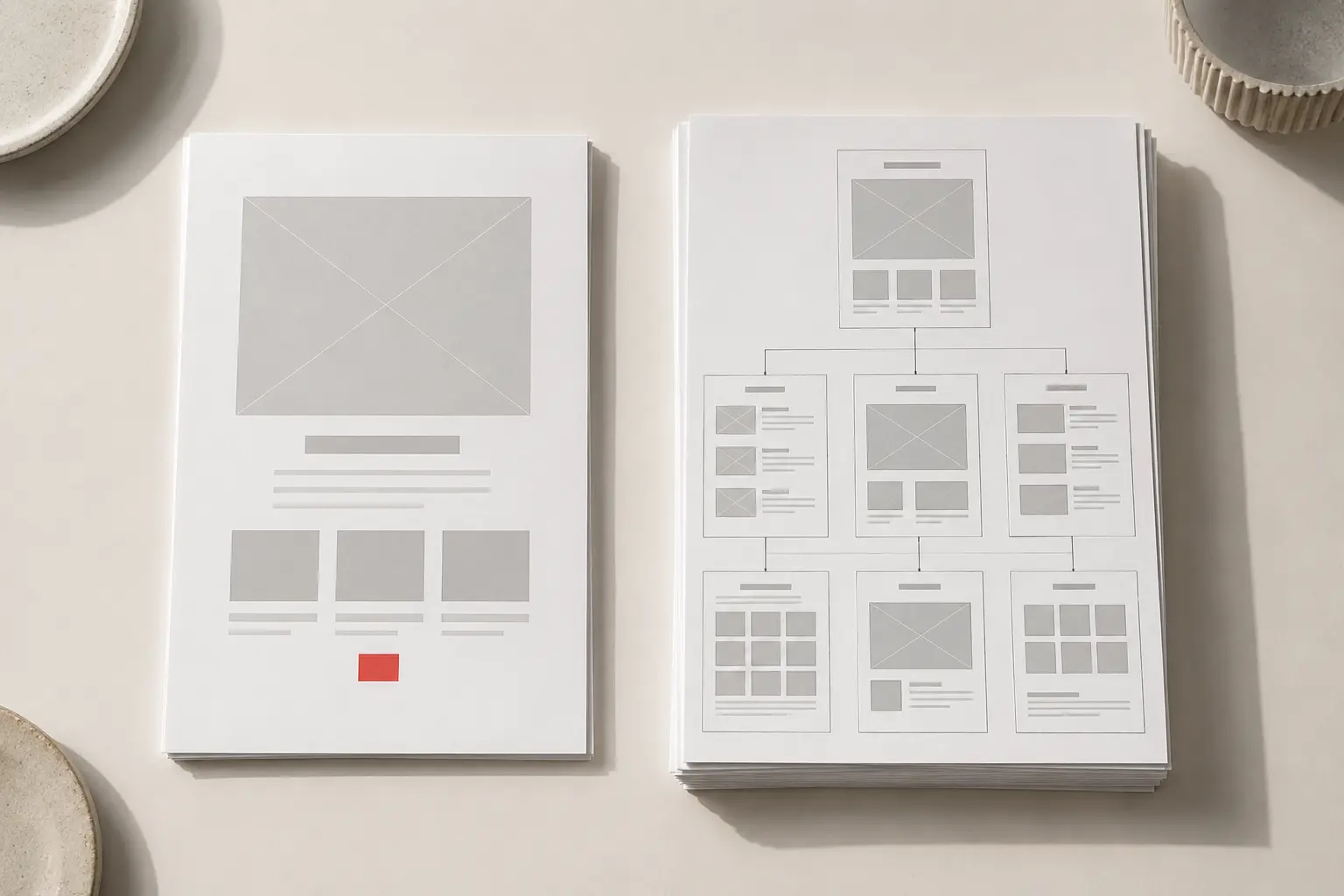
A company website is designed to explain the broader business.
Visitors may want to understand:
• Services
• Products
• Portfolio
• Company background
• Contact details
• Credibility
• Multiple possible next steps
A campaign landing page is much more focused.
It is usually built around:
• One audience
• One offer
• One campaign
• One primary conversion action
COMPANY WEBSITE
Built to inform and build trust.
LANDING PAGE
Built to support one focused journey.
Neither is automatically better.
The right choice depends on where the visitor came from and what they need to do next.
Why a Generic Homepage Can Waste Paid Traffic
Imagine someone sees an ad offering:
“Get a free consultation for your new commercial website.”
They click because that message feels relevant.
Then they land on a homepage showing:
• A general company introduction
• Several unrelated services
• Portfolio work
• About Us
• Multiple navigation links
• Different CTAs
Now the visitor has to find the original offer again.
Every extra decision creates friction.
The page after the click should continue the conversation started by the ad.
When the message changes, visitors may leave before understanding what you want them to do.
When Should You Use the Main Website?
A full company website is useful when visitors need to explore before making a decision.
It can be the better destination when:
• You offer several products or services
• People are researching the company
• You need to show a large portfolio
• Trust and credibility matter
• Traffic comes from referrals or branded search
• The customer journey naturally needs more information
Think of the website as the digital headquarters.
It gives customers the broader picture.
When Does a Campaign Need a Landing Page?
A landing page becomes more useful when the campaign has one clear objective.
Examples:
• Generate WhatsApp enquiries
• Collect lead-form submissions
• Book consultations
• Promote one product
• Launch a limited-time offer
• Register people for an event
• Request quotations
• Capture sign-ups
Instead of asking users to explore the whole website, the page guides them through one focused journey.
AD CLICK
The visitor responds to one message.
LANDING PAGE
The page continues that message and explains why it matters.
ENQUIRY
A clear CTA makes the next step easy.
What Should a Strong Landing Page Include?
A landing page does not need dozens of sections.
It needs enough information to help the visitor understand the offer, trust the business and act.
1. A Clear Headline
The first screen should explain what the offer is and why it matters.
Avoid vague lines such as:
“We provide high-quality solutions for your business.”
A stronger headline is specific:
“Reduce Factory Heat with an Industrial Ventilation System Designed for Large Spaces.”
Specific messaging helps users decide quickly whether the page is relevant.
2. A Strong Visual
The hero visual should help explain the offer.
Depending on the campaign, that might be:
• Product demonstration
• Commercial video
• Installation or project showcase
• Before-and-after visuals
• Spokesperson content
• Product photography
The visual should clarify the offer — not exist only for decoration.
3. Benefits, Not Only Features
Businesses often list technical specifications without explaining why they matter.
A better structure is:
Feature → What it means → Why the customer should care.
For example:
“2-year warranty” is a feature.
The customer benefit is lower perceived risk and more confidence in the purchase.
4. Proof and Credibility
Paid traffic may be discovering your brand for the first time.
Useful trust signals include:
• Client logos
• Testimonials
• Case studies
• Completed projects
• Years of experience
• Certifications
• Warranties
• Real product or team visuals
5. FAQs
FAQs help remove objections before someone contacts you.
Useful topics can include:
• Pricing or starting budget
• Turnaround time
• Service area
• What is included
• Warranty
• Process
• Eligibility
• Delivery
6. A Low-Friction Form
Do not ask for more information than you need.
For an initial enquiry, fields may be limited to:
• Name
• Company
• Phone / WhatsApp
• Service needed
• Short project description
The form should be easy to complete on mobile.
Mobile Experience Matters
A large amount of paid traffic arrives from mobile devices.
A page that works on desktop can still lose leads if the mobile version is difficult.
Prioritise:
• Readable text
• Large CTA buttons
• Short forms
• Clear spacing
• Compressed media
• Simple navigation
• Fast access to WhatsApp or enquiry actions
Page Speed Is Part of Conversion
Every ad click costs money.
If the page takes too long to load, some visitors leave before seeing the offer.
Conversion-focused website work is not only visual.
It also includes practical performance choices:
• Compress images and videos
• Avoid unnecessary scripts
• Reduce heavy animations
• Test real mobile devices
• Keep the most important content fast to access
Match the Landing Page Message to the Ad
Message consistency is one of the simplest ways to reduce friction.
If the ad says:
“Get 20% Off Your First Corporate Video Package”
The landing page should immediately reinforce that same offer.
Do not make the visitor wonder whether they clicked the correct link.
AD
One clear message.
LANDING PAGE
Same message, more detail and proof.
CTA
One clear next step.
Do You Need a Website, Landing Page or Both?
For many businesses, the best answer is both.
The website acts as the long-term digital home of the company.
It builds credibility, explains services and gives customers somewhere to research the business.
Landing pages support specific campaigns.
Instead of forcing one homepage to handle every visitor, focused pages can support different audiences and offers.
Website = Brand & Credibility
Landing Page = Campaign & Conversion
Before Sending More Traffic, Fix What Happens After the Click
Increasing ad budget will not fix a weak post-click experience.
Review:
• Does the headline match the ad?
• Can visitors understand the offer quickly?
• Is there one clear CTA?
• Are trust signals visible?
• Are objections answered?
• Is the enquiry process simple?
• Does the page work well on mobile?
A strong paid media strategy does not stop at the click.
The ad, destination page and enquiry journey should work as one connected system.
