
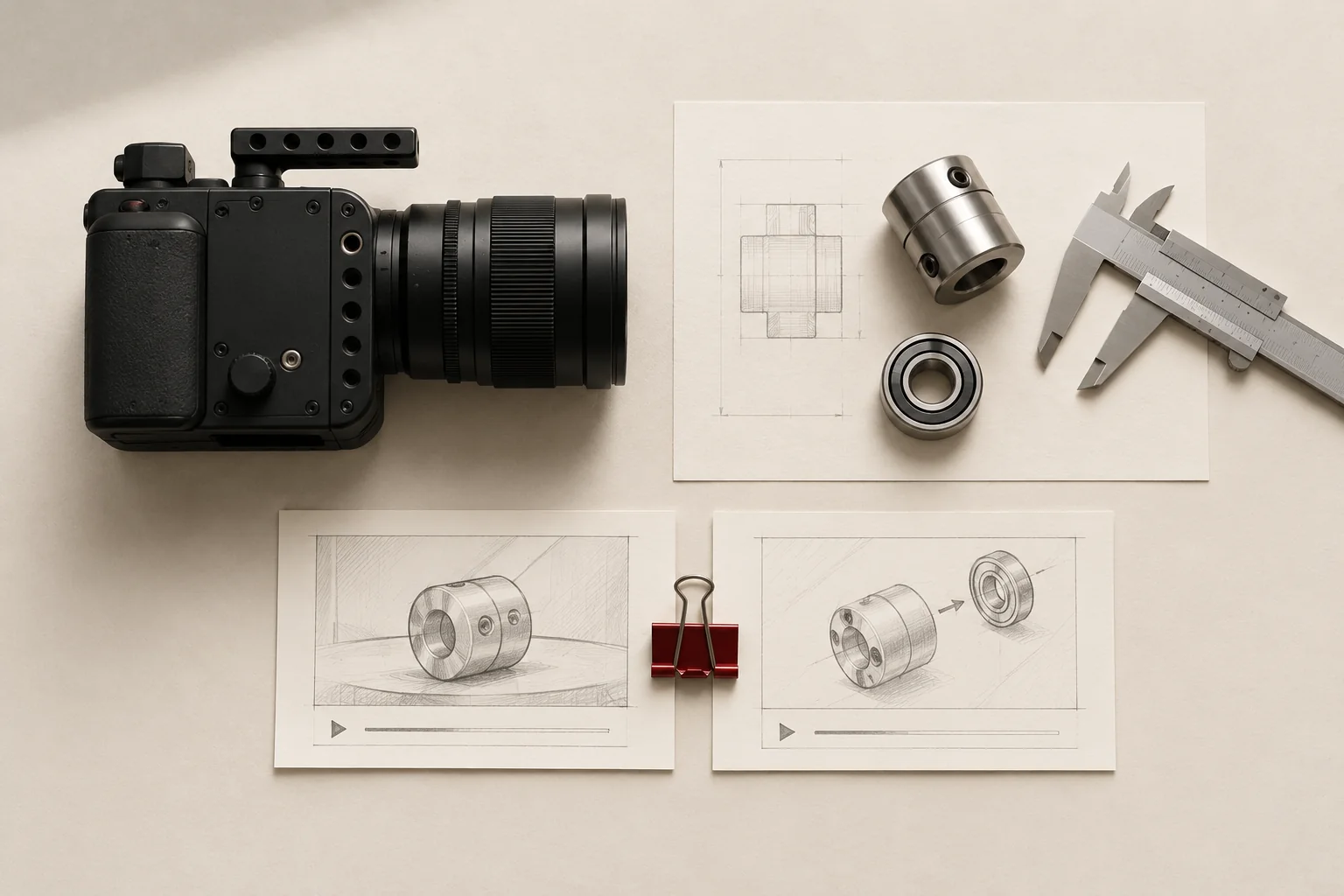
B2B marketing does not have to look like a corporate brochure turned into a video.
For industrial suppliers, manufacturers, engineering companies, contractors and corporate service providers in Malaysia, video can do much more than make the brand look modern.
It can help potential customers:
• Understand technical products
• See the scale of your operations
• Evaluate your capabilities
• Compare solutions
• Build trust before speaking to sales
This matters because many B2B purchases are not impulse decisions.
The buyer may need to compare suppliers, discuss internally, request specifications, review quotations and evaluate long-term value before approving a project.
In B2B marketing, video is not only an attention tool.
It can also be a trust-building and sales-support asset.
B2B Content Does Not Need to Be Boring
Many industrial and corporate businesses still approach digital marketing very traditionally.
Their feeds may contain:
• Product photos
• Festive greetings
• Company announcements
• Technical specifications
But very little content helps potential customers understand why they should choose the business.
At the other extreme, some B2B companies assume social media means copying consumer trends.
Neither approach is necessary.
Strong B2B content can stay professional while still being clear, engaging and easy to understand.
Professional does not have to mean complicated.
Technical does not have to mean difficult to watch.
Start with What the Customer Wants to Know
One of the biggest B2B content mistakes is creating everything from the company’s point of view.
The business wants to talk about:
• Product specifications
• Years of experience
• Company history
• Equipment
• Certifications
• Technical capabilities
Those things can matter.
But buyers are usually thinking about something more practical:
Can this supplier solve my problem?
Can they handle a project of our size?
Is the product suitable for our application?
Is stock available?
How long will installation or delivery take?
What happens if something goes wrong?
Why should we choose this supplier instead of another one?
Good B2B content connects technical strengths to real buying concerns.
Turn Specifications into Visual Proof
Technical products can be difficult to market when communication relies too heavily on specification lists.
A buyer may see dimensions, output ratings, materials or technical terminology without understanding why those details matter.
Video gives you a way to show the meaning behind the specification.
Example:
SPECIFICATION
Large airflow capacity
VISUAL PROOF
Show the fan operating inside a real warehouse.
CUSTOMER VALUE
The audience sees how the specification affects the real environment.
Another example:
SPECIFICATION
Heavy-duty construction
VISUAL PROOF
Show materials, components and installation details.
CUSTOMER VALUE
The buyer understands why the product is built for demanding use.
This approach works especially well for:
• Industrial equipment
• Machinery
• Construction systems
• Electrical products
• Commercial equipment
• Technical services
Show Scale, Not Only Products
In many B2B industries, customers are not only buying a product.
They are evaluating whether the supplier can support the project.
Useful video footage can include:
• Factory operations
• Warehouse stock
• Installation teams
• Quality-control processes
• Machinery
• Delivery preparation
• Completed projects
• Site assessments
• Real employees at work
These scenes build credibility.
Do not only tell customers you can handle large projects.
Show them.
Sell Long-Term Value, Not Only Price
Price matters in B2B purchasing.
But competing only on price makes differentiation difficult.
Content should also communicate the factors that reduce risk and create long-term value.
WARRANTY
Show how after-sales support gives the buyer more confidence.
QUALITY
Demonstrate materials, workmanship and process.
CAPACITY
Show the scale of your warehouse, factory or project capability.
RELIABILITY
Use real projects and operational footage as proof.
The goal is to move the conversation from:
“Who is cheapest?”
Toward:
“Which supplier gives us the most confidence?”
Use Different Videos for Different Stages of the B2B Sales Cycle
Not every video needs to ask for an immediate quotation.
B2B buying journeys can be longer, so different content should perform different roles.
AWARENESS
Introduce the problem, application or industry situation.
EDUCATION
Explain products, technical concepts and buying considerations.
TRUST
Show projects, operations, testimonials and company capability.
CONVERSION
Encourage quotation requests, consultations or site assessments.
Educational Content Works Especially Well in B2B
In technical industries, expertise is part of what customers are buying.
That makes educational content especially valuable.
Instead of repeatedly saying:
“Our product is available in several sizes.”
Turn it into a customer-led question:
“Which size is suitable for your warehouse?”
Other useful B2B content topics include:
• How to choose the correct product size
• Common mistakes before installation
• What buyers should check before requesting a quotation
• Product A vs Product B
• How installation works
• What affects project cost
• How long a project usually takes
• Maintenance guidance
• Common industry misconceptions
This demonstrates expertise while helping buyers make better decisions.
Real Project Case Studies Can Be More Persuasive Than Generic Corporate Videos
A polished corporate video has value.
But for project-based businesses, a real case study can often be more convincing.
A simple case-study structure is:
THE PROBLEM
What challenge was the client facing?
THE SOLUTION
What did your company recommend or install?
THE RESULT
What changed after the project?
The project becomes evidence of capability.
This is useful for:
• Contractors
• Manufacturers
• Industrial equipment suppliers
• Interior companies
• Engineering businesses
• Other project-based services
Short-Form Video Still Has a Place in B2B
B2B does not mean every video needs to be three minutes long.
A 20- to 45-second video may be enough to explain:
• One customer problem
• One technical insight
• One product advantage
• One FAQ
• One project highlight
• One before-and-after comparison
These videos can work across Facebook, Instagram, websites and other channels relevant to the audience.
Longer educational content, interviews and project case studies can support LinkedIn, presentations and websites.
Paid Media Can Extend the Value of Strong B2B Content
Organic reach alone may not put the content in front of enough relevant decision-makers.
Paid campaigns can help extend strong creative to selected audiences or capture demand.
Examples:
• Educational videos for awareness
• Product videos for specific solutions
• Case studies for retargeting
• Testimonial content to build confidence
• Offer-led ads to generate quotations or enquiries
The creative should match the stage of the customer journey.
Retargeting Matters in Longer Sales Cycles
Someone who watches a video today may not enquire today.
They may still be:
• Researching suppliers
• Waiting for approval
• Comparing quotations
• Planning a future budget
• Preparing technical requirements
A longer B2B journey can look like:
FIRST TOUCH
Educational video
SECOND TOUCH
Project case study or product proof
NEXT STEP
Quotation, consultation or site assessment
Not every useful piece of content needs to convert immediately.
Your Sales Team Can Reuse Video Too
Good B2B content should not stay only on social media.
Sales teams can reuse it in:
• WhatsApp conversations
• Sales presentations
• Quotation follow-ups
• Trade exhibitions
• Company websites
• Landing pages
• Distributor presentations
A product demonstration or project case study can help sales teams explain complex information more efficiently.
What Should a Malaysian B2B Brand Film First?
You do not need to begin with a huge campaign.
Start with the parts of the business that already contain useful proof and expertise.
Good starting points:
• Factory, warehouse or showroom
• Real installation or project process
• Product demonstrations
• Technical FAQs
• Before-and-after projects
• Customer case studies
• Founder or expert explanations
• Quality-control process
• Product comparisons
• Frequently requested specifications
B2B Video Should Make Complex Decisions Easier
The goal is not to turn every industrial company into an entertainment brand.
The goal is to communicate value more clearly.
A strong B2B video strategy should help customers:
• Understand what you sell
• See where the product is used
• Understand technical benefits
• Evaluate capability
• Build trust
• Feel more confident taking the next step
For Malaysian industrial and corporate brands, video becomes most useful when it is built around real customer questions, technical value and visible proof.
RELEVANT CLIPKER WORK
Smart Cable
B2B cable content and lead generation for contractor and project audiences.
Smart Electro
Industrial product education and digital lead generation for HVLS and ventilation solutions.
K.Y. Roof & Steel
On-site project content that shows real construction and execution capability.
Urban Farm Tech
Technical, educational and event content for urban farming and smart-agriculture solutions.
